
"arabica processing"
10000 article(s) found
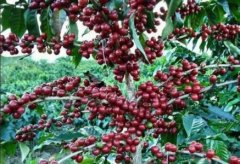
History, cultivation, characteristics and varieties of Arabica
Arabica is deeply loved by Chinese people with a short history of coffee contact because of its strong fruity aroma. it was introduced to China by missionaries in the 19th century and was widely planted in Panzhihua, Sichuan, and the dry-hot valley of the Jinsha River in western Yunnan, where the sunshine was long and there was a big temperature difference between day and night. The local people solved the problem of insufficient seasonal rainfall by diverting water up the mountain.

Introduction to the flavor and taste of coffee manor in Arabica, Ethiopia
Arabica is deeply loved by Chinese people with a short history of coffee contact because of its strong fruity aroma. it was introduced to China by missionaries in the 19th century and was widely planted in Panzhihua, Sichuan, and the dry-hot valley of the Jinsha River in western Yunnan, where the sunshine was long and there was a big temperature difference between day and night. The local people solved the problem of insufficient seasonal rainfall by diverting water up the mountain.

Basic knowledge of all aspects of coffee
Linnaeus (Swedish naturalist) classifies coffee plants into the Rubiaceae family, such as gardenia. The great naturalist named it Coffea. Although wild plants can grow as high as 10-12 meters, the plantations are about 3 to 5 meters high, with the exception of Colombia, where tree species rarely exceed 2 meters. This makes farming and picking easier and more economical to cultivate. Leaves

A brief introduction to Brazilian Coffee
Coffee varieties: both Arabica and Robusta are raw and manufactured, of which Arabica accounts for 70% to 80%. Among Arabica coffee varieties, there are Modo Novo, Catuai, Bourbon, Maragoripe and so on. Coffee harvest can usher in three or four harvest seasons in a year, and mechanical picking is extremely widespread. The path of picking is very different from that of other masterpieces. Mechanical picking

The hometown of Ethiopian Arabica Coffee the grade of Ethiopian coffee
Professional coffee knowledge exchange more coffee bean information Please pay attention to the coffee workshop (Wechat official account cafe_style) afraid of insomnia, palpitations, drink decaf coffee is healthier? Are you worried about palpitations, insomnia, or switching to decaffeinated coffee because of pregnancy? When drinking coffee, you want to consume less caffeine, which is actually similar to the variety of coffee beans and the size of grinding particles.

Is Arabica Coffee beans instant Coffee? is Arabica Coffee beans Commercial Coffee?
Professional coffee knowledge exchange more coffee bean information Please pay attention to the coffee workshop (Wechat official account cafe_style) although there are many kinds of coffee available on the market, different places and plantations will produce coffee with different tastes, but generally speaking, there are only two main choices: Robusta and Arabica. The output of Robusta is higher than that of Arabica.

The harm of instant coffee in healthy life
The first is essence: it starts with the production process of instant coffee. Instant coffee is produced by drying after extracting active ingredients from roasted coffee beans. In this process, some aromatic substances will inevitably be lost, so that the flavor and taste of the finished product is not as rich and pure as that of directly roasted coffee. The production process is generally as follows: pretreatment, roasting, grinding, extraction, concentration and drying, in which the pretreatment is

Basic knowledge of all aspects of coffee decaf coffee
Linnaeus (Swedish naturalist) classifies coffee plants into the Rubiaceae family, such as gardenia. The great naturalist named it Coffea. Although wild plants can grow as high as 10-12 meters, the plantations are about 3 to 5 meters high, with the exception of Colombia, where tree species rarely exceed 2 meters. This makes farming and picking easier and more economical to cultivate. Leaves
What is Arabica coffee?
In many places where coffee is sold, it is not difficult to find words like "100% Arabica". Even canned coffee has a style called Arabica coffee, which makes one wonder: what is "Arabica coffee"?
Arabica and Robusta
The difference between Arabica and Robusta in many places where coffee is sold, it is not difficult to find words like "100% Arabica". Even canned coffee has a style called "XX Arabica Coffee", which makes one wonder: what is "Arabica Coffee"? In fact, Arabica is the name of the coffee tree variety (species). Arabica (Coffea A)

Introduction to the method of grinding and calibration for flavor description of Arabica bean and Robesda bean
Arabica bean and Robesda bean flavor description grinding scale treatment method Arabica is deeply loved by Chinese people with a short history of coffee contact because of its strong fruity aroma. It was introduced to China by missionaries in the 19th century. It is widely planted in the dry-hot valley of the Jinsha River, which is more than 1000 meters above sea level in Panzhihua, Sichuan and western Yunnan.
The basic knowledge of coffee encyclopedia on all aspects of coffee
Linnaeus (Swedish naturalist) classifies coffee plants into the Rubiaceae family, such as gardenia. The great naturalist named it Coffea. Although wild plants can grow as high as 10-12 meters, the plantations are about 3 to 5 meters high, with the exception of Colombia, where tree species rarely exceed 2 meters. This makes farming and picking easier and more economical to cultivate. Leaves

Introduction to the Variety characteristics of Coffee Flavor description method in Sidamo Shachisuo, Ethiopia
Sidamo coffee beans Ethiopia is the hometown of Arabica coffee, and it is in the forests of the Kaffa region that you can see wild Arabica coffee. In Ethiopian, coffee is called Bun or Buna, and coffee beans (coffeebean) may be translated from Kaffa Bun. Arabica was discovered early in Harald (Harar).

The processing method of grinding degree and baking degree of fine coffee beans in Kahayang Gan Manor with obvious sweet taste of fruit
BengawanSoloCoffee: there are 37 branches, starting with IpengWi-djojo 's obsession with coffee taste, focusing on choosing high-quality local ingredients and roasting their own coffee, making a well-known coffee shop as popular as a foreign coffee chain. CoffeeToffee:2006 launched a local freshman chain in Surabaya at the end of the year, thanks to the love of espresso.
The output of Arabica coffee beans in Yunnan has increased steadily and the quality has improved to the level of coffee beans in Central America.
The production of Yunnan Arabica coffee beans (arabica, also known as small-grain coffee) has been growing steadily over the past decade. Volcafe, a well-known multinational coffee trader, has set up a procurement and processing joint venture in Yunnan, a move that is expected to boost China's exports of high-quality coffee beans. Traders say its quality has improved to a level comparable to Central American coffee beans. Over the past 10 years

Basic knowledge about all aspects of coffee-baristas must see
Linnaeus (Swedish naturalist) classifies coffee plants into the Rubiaceae family, such as gardenia. The great naturalist named it Coffea. Although wild plants can grow as high as 10-12 meters, the plantations are about 3 to 5 meters high, with the exception of Colombia, where tree species rarely exceed 2 meters. This makes farming and picking easier and more economical to cultivate. Leaves

100% Arabica Cafe Japan% arabica boutique Cafe
Professional coffee knowledge exchange more coffee bean information please follow the coffee workshop (Wechat official account cafe_style) Qianjie-Japan% Arabica boutique coffee% Arabica coffee shop from Kyoto to the world originated in Discovery Bay, Hong Kong * developed in Kyoto, Japan in September 2014, Kenneth Shoji and Junichi Yamaguchi are in a 50-year-old Japanese house next to the antique Masaka Pagoda in Kyoto
The difference between Arabica and Robusta
In many places where coffee is sold, it is not difficult to find words like "100% Arabica". Even canned coffee appears in a style called "XX Arabica Coffee", which makes one wonder: what is "Arabica Coffee"?
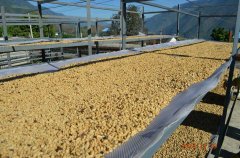
Coffee three native species Arabica species: Ethiopia 90+levelup Flower language Sunlight Sidama
Coffee belongs to Rubiaceae coffee evergreen shrubs, tropical regions as the center, about 500 genera 6000 species of Rubiaceae plants distributed in this. Coffee has long been considered to have certain medicinal effects, such as stomach, mind, hemostasis, heat dissipation, physical strength and so on. There are about 40 species of plants in the genus Coffea, but only Arabica, Robusta and Libby can produce coffee beans with commercial value.

Taste characteristics of Robusta Coffee introduction to Manor by description of Flavor in producing area
"Robusta" coffee, commonly known as "sturdy beans", can be grown at low elevations (200 to 800 meters above sea level), has strong resistance to diseases and insect pests, is not vulnerable to agricultural disasters, has a high annual output per unit area, and is harvested in large quantities by machine. in general, the cost of production is much lower than that of Arabica coffee. Arabica coffee with different flavor characteristics has changeable and broad potential.